
Choosing a new air conditioner for a Plano home isn’t simply a matter of comparing efficiency ratings or picking the system with the highest number on the proposal. The way an AC controls its cooling output affects how it responds to Plano’s changing summer conditions, how evenly it cools the home, and how often it operates at full capacity.
A single-stage, two-stage, and variable-speed system all cool the home differently. Single-stage equipment operates at one capacity, while two-stage systems use lower or higher output depending on demand. Variable-speed systems make smaller adjustments for steadier temperature control.
For a homeowner replacing an AC in Plano, the best choice depends on the home’s size, insulation, ductwork, comfort concerns, budget, and how much control you want over temperature and humidity. Understanding how each type actually works makes it much easier to compare the options.
What Is a Single-Stage Air Conditioner?
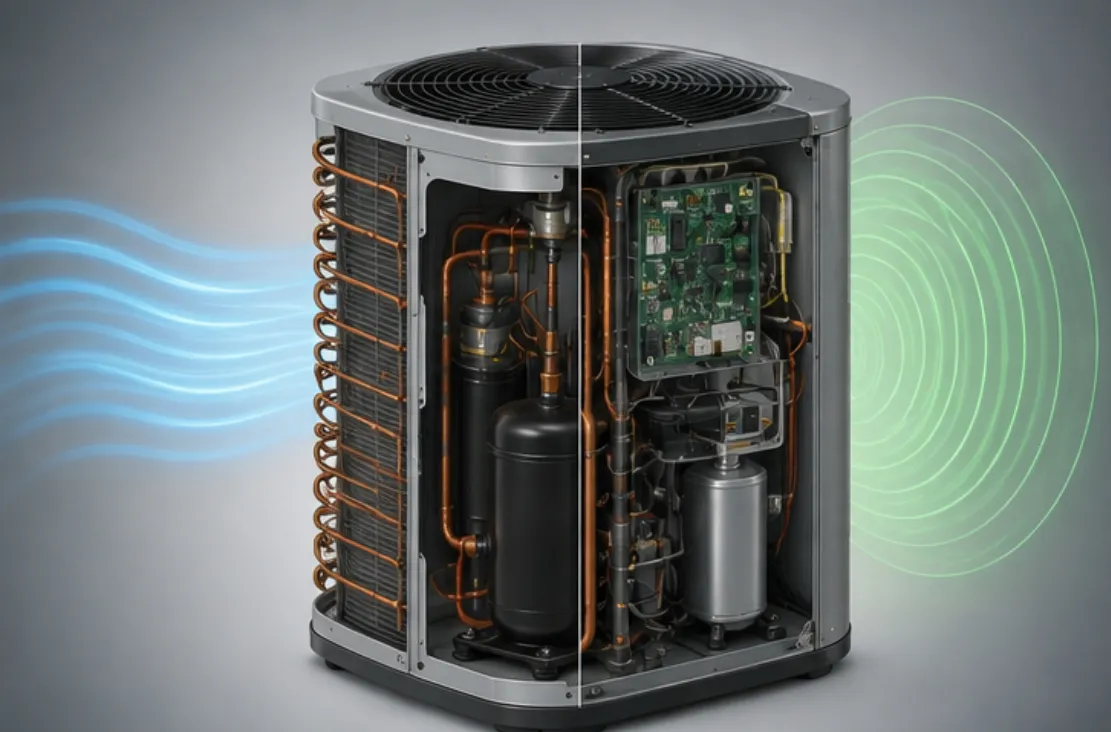
A single-stage air conditioner has one primary cooling output. When the thermostat calls for cooling, the compressor turns on and operates at its designed capacity until the thermostat reaches the set temperature. It then shuts off until the next cooling cycle begins.
Think of it as an on-or-off approach to cooling. If the system is rated at a particular capacity, it generally delivers that capacity whenever it is running rather than adjusting its output based on how much cooling the home needs at that moment.
That straightforward operation is what makes single-stage equipment attractive for some Plano homeowners. There are fewer operating levels to manage, the controls are relatively simple, and the equipment can be a practical choice when upfront cost is an important consideration.
How Single-Stage Cooling Works
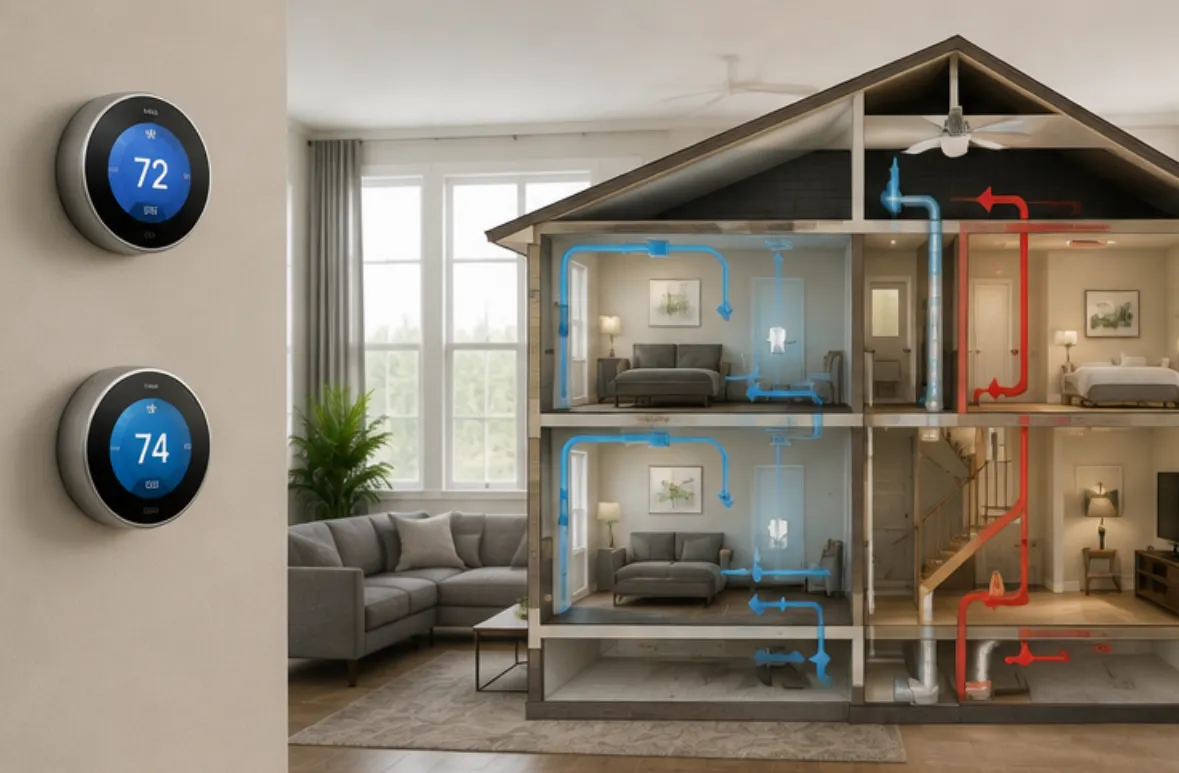
Suppose your thermostat is set to 74°F and the indoor temperature rises to 75°F. The thermostat signals the AC to start. The compressor operates at its full available cooling capacity until the thermostat is satisfied, and then the system shuts down.
During a very hot Plano afternoon, that full-capacity operation can be useful because the home has a larger cooling demand. But during milder weather, the home may require considerably less cooling than the system can provide at full output.
This can lead to more noticeable starts and stops compared with systems that can adjust their capacity.
What Makes It Unique?
The main advantage of single-stage equipment is simplicity. There isn’t a complicated range of operating capacities to compare, and the basic operating concept is easy for homeowners to understand.
It can make sense for a smaller, well-insulated Plano home where temperature differences are minimal and advanced capacity control isn’t a priority. However, homeowners should not assume that a single-stage system is automatically the best value simply because its initial price is lower.
What Is a Two-Stage Air Conditioner?
A two-stage air conditioner has two levels of cooling output rather than just one. Under lighter cooling conditions, the system can operate at its lower stage. When the home needs more cooling, it can shift to its higher stage to provide additional capacity.
This gives the system more flexibility than a single-stage AC without the continuously adjustable output of a variable-speed system.
For a Plano homeowner, the difference can become noticeable during a long summer day. The home may need only moderate cooling in the morning, but demand can increase substantially during the afternoon as outdoor temperatures rise and sunlight adds heat through windows and the roof.
How Two-Stage Cooling Works
Instead of immediately operating at maximum capacity every time the thermostat calls for cooling, a two-stage system can begin at a lower output when conditions allow. If the home continues to need more cooling, the system can move to its higher stage.
For example, a system might spend much of a mild morning operating at its lower stage, then use its higher stage during the hottest part of the afternoon. The exact operation depends on the equipment, thermostat, controls, and installation.
The result is fewer full-capacity cycles than a comparable single-stage system while still providing additional cooling when demand increases.
What Makes It Unique?
The key feature of a two-stage AC is two distinct levels of cooling. It sits between basic single-stage equipment and continuously adjusting variable-speed equipment.
That makes two-stage systems appealing to homeowners who want more refined operation than a basic AC provides but don’t necessarily want to pay for the highest level of capacity control. They can also be useful in homes where cooling demand changes noticeably throughout the day.
However, the equipment should still be properly sized. Two-stage operation cannot compensate for an AC that is fundamentally too large or too small for the home.
What Is a Variable-Speed Air Conditioner?
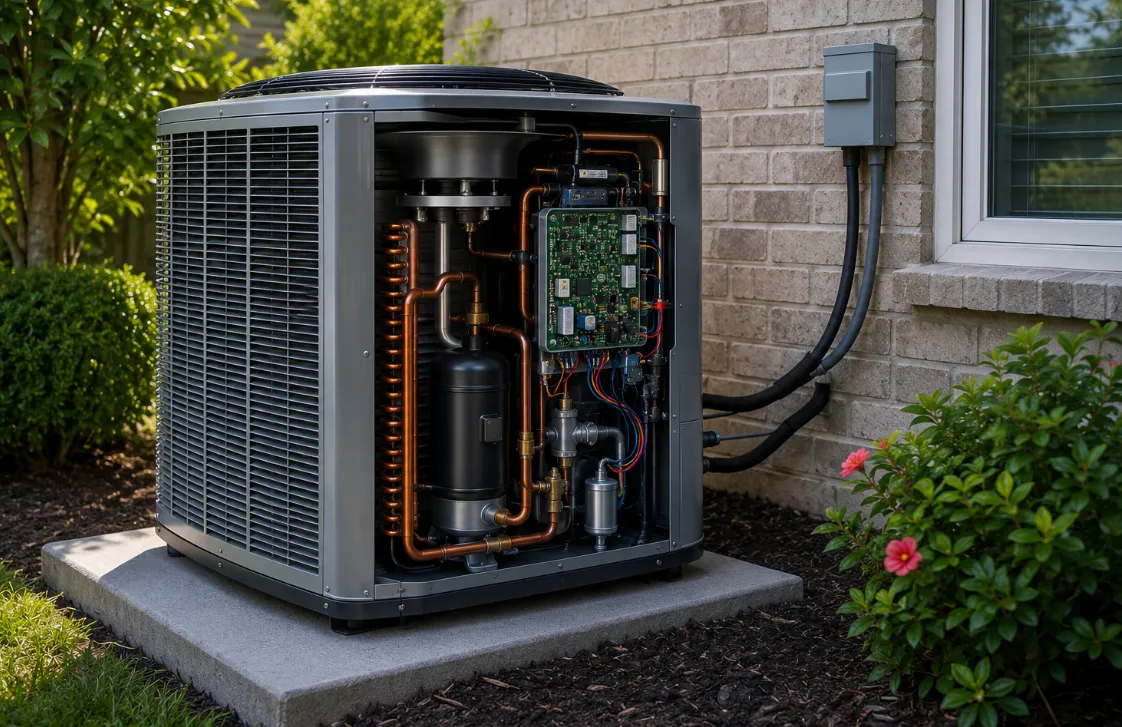
A variable-speed air conditioner can adjust its cooling output across a much broader range rather than being limited to one or two operating levels. Instead of simply turning cooling on at full capacity or switching between two stages, the system can make smaller adjustments as the home’s cooling demand changes.
That makes variable-speed equipment particularly different from traditional single-stage and two-stage systems. The objective is not always to cool the home as quickly as possible. Instead, the system can operate at a lower output for longer periods when the home only needs a modest amount of cooling and increase capacity as demand rises.
For a Plano home, that flexibility can be valuable because cooling demand can change significantly throughout the day.
How Variable-Speed Cooling Works
Imagine that your home needs only a modest amount of cooling to maintain 74°F on a relatively mild morning. Rather than operating at full capacity and quickly reaching the thermostat setting, a variable-speed system can reduce its output and continue operating at a lower level.
Later, when the outdoor temperature climbs into the 90s°F and solar heat increases, the system can increase its output to meet the larger cooling demand.
This continuous adjustment can provide more consistent operation than systems with only one or two cooling stages. It can also help reduce the noticeable temperature swings that some homeowners experience with frequent starts and stops.
What Makes It Unique?
The defining characteristic is capacity modulation. A variable-speed system can make much smaller output adjustments than a single-stage or two-stage AC.
That can make it particularly attractive for larger Plano homes, homes with varying cooling loads, or homeowners who prioritize consistent temperatures and quieter operation. Variable-speed equipment can also pair well with properly designed zoning when different areas of the home have substantially different cooling needs.
The tradeoff is that variable-speed systems typically involve more sophisticated equipment and controls, which can increase the initial installation cost. The system also needs to be properly selected and installed for its benefits to translate into real-world comfort.
How Do Single-Stage, Two-Stage, and Variable-Speed ACs Differ?
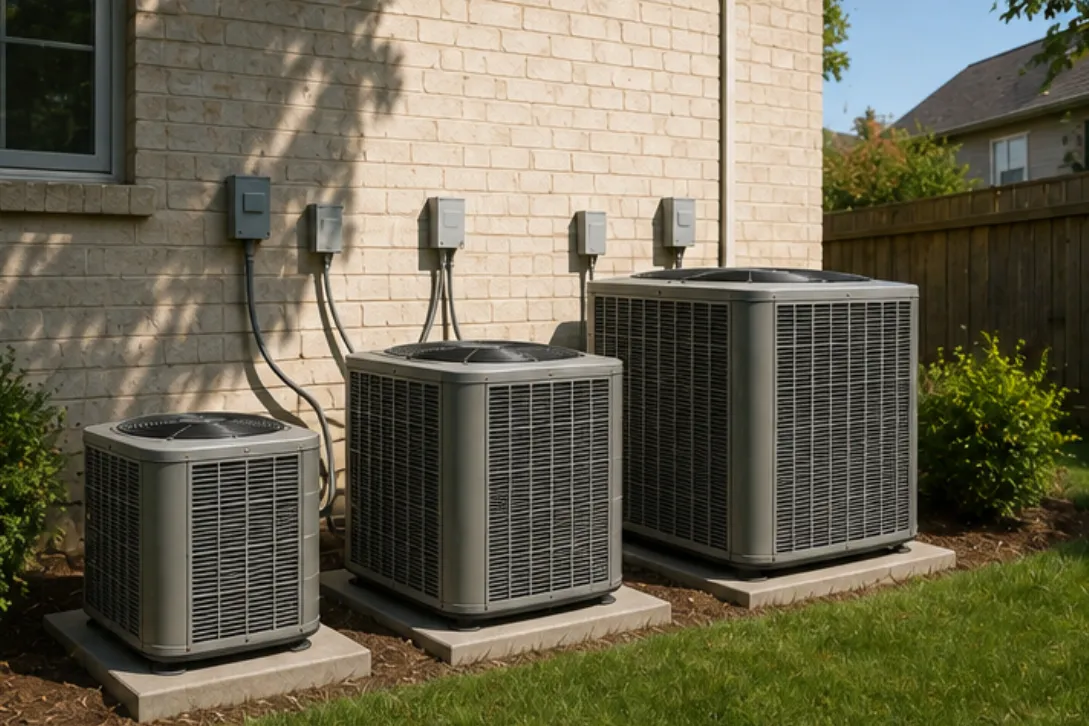
The biggest difference is how closely each system can match the cooling demand of your Plano home. Single-stage equipment uses one fixed output, two-stage equipment has a lower and higher output, while variable-speed equipment can make much finer adjustments as conditions change.
| AC Type | How It Delivers Cooling | What Makes It Different | Where It Can Fit Best |
| Single-Stage | One fixed capacity | Simple, straightforward operation | Smaller or well-balanced homes |
| Two-Stage | Two cooling levels | Better adjustment during changing demand | Homes with moderate load variations |
| Variable-Speed | Broad range of adjustable output | Closely matches changing cooling demand | Larger homes or comfort-focused homeowners |
For a Plano homeowner, the choice comes down to how the home behaves throughout the cooling season. A single-stage system may provide dependable cooling at a lower initial cost, while two-stage and variable-speed systems can provide more gradual operation when cooling demand changes.
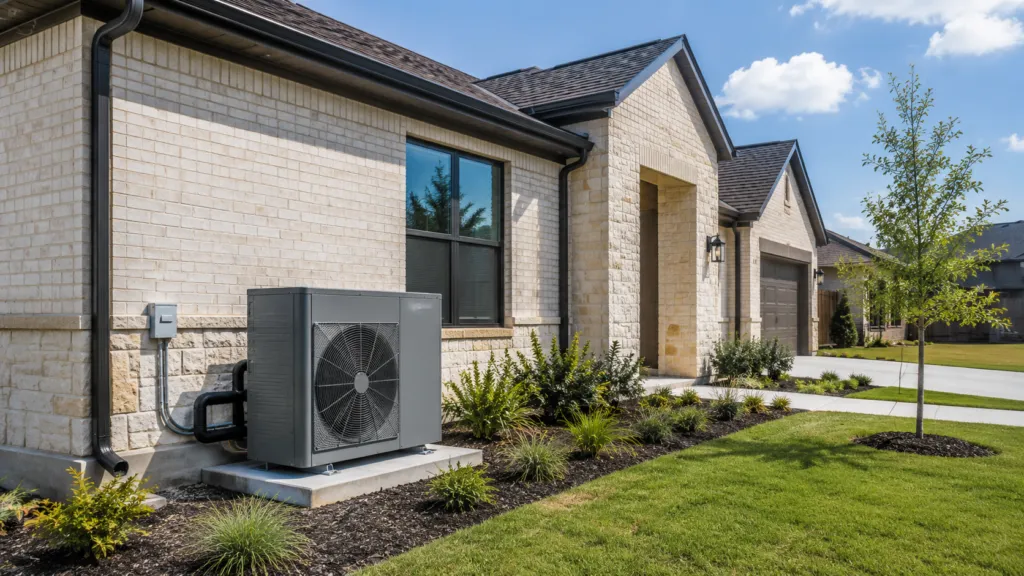
If you’re planning an air conditioning installation in Plano, the equipment type should be considered alongside system sizing, ductwork, zoning, efficiency, and your home’s comfort requirements. More advanced technology isn’t automatically better if the rest of the installation isn’t designed to support it.
Which Type of Air Conditioner Makes Sense for a Plano Home?
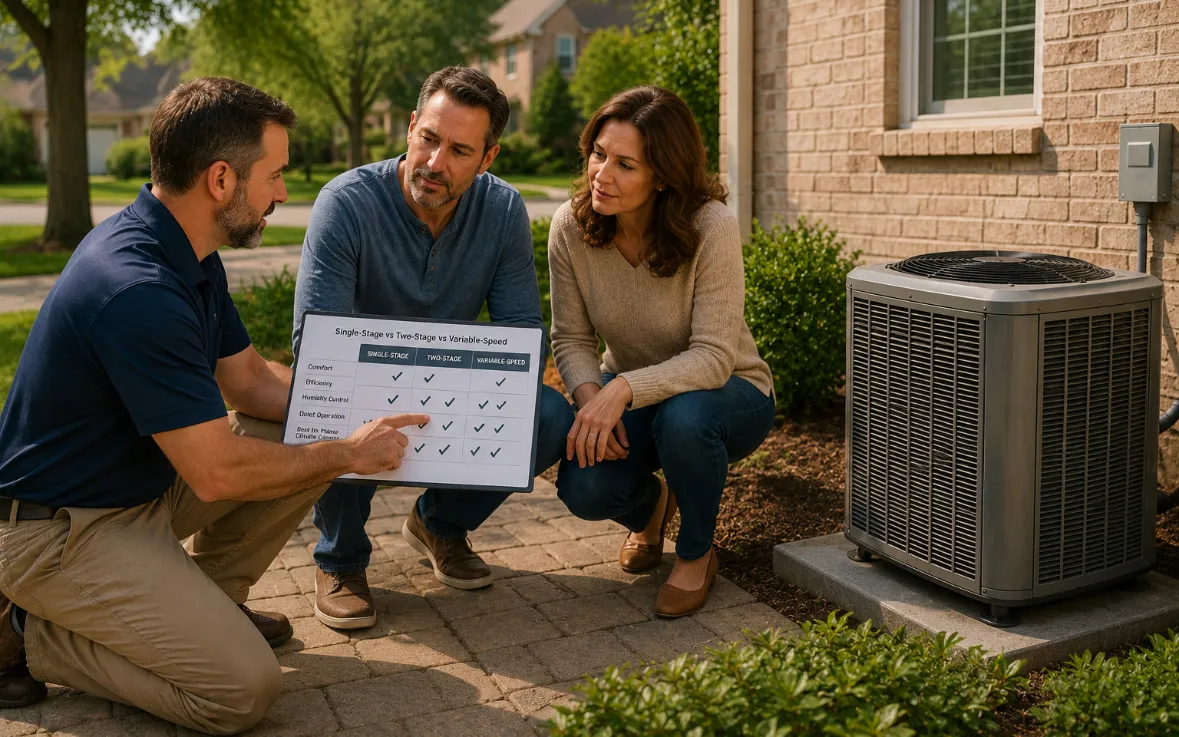
The best choice depends on how your home handles cooling demand, not simply on which technology has the most features. A smaller, well-insulated Plano home with relatively even temperatures may work well with a properly sized single-stage system, while a larger home with changing cooling demands may benefit from two-stage or variable-speed equipment.
Consider these factors before choosing:
- Home size and layout: Larger homes may benefit more from equipment that can adjust output as different areas require cooling.
- Existing ductwork: Restricted or poorly balanced ducts can limit the benefits of more advanced equipment.
- Comfort problems: Frequent temperature swings, hot rooms, or uneven cooling may justify more precise capacity control.
- Humidity concerns: Longer, steadier operation can be helpful when indoor moisture control is an important comfort concern.
- Budget: Single-stage equipment generally offers the simplest upfront option, while advanced systems require a larger initial investment.
- Long-term plans: If you expect to remain in the home for many years, the benefits of more sophisticated operation may matter more than the initial price difference.
For many Plano homeowners, two-stage equipment can provide a practical middle ground, while variable-speed equipment may be worth considering when comfort control and quieter, more consistent operation are higher priorities. A single-stage system can still be the right choice when the home’s cooling requirements are straightforward.
What Should You Check Before Choosing a Single-, Two-, or Variable-Speed AC?
The equipment should be selected only after the home itself has been evaluated. A proper load calculation helps determine the required cooling capacity, while an inspection of the ductwork and return-air system can reveal whether the existing air distribution will support the proposed equipment.
Ask the HVAC contractor to explain how the recommended system was selected and what you are gaining from the additional technology. If you’re planning an air conditioning installation in Plano, compare the complete installation rather than the outdoor unit alone, including equipment sizing, efficiency, controls, ductwork, warranty, and installation scope.
Why Choose Kelly’s Heating & Air for Your Plano AC Installation?
Choosing between single-stage, two-stage, and variable-speed equipment is easier when the recommendation starts with your home rather than a standard equipment package. Kelly’s Heating & Air brings 118 years of combined HVAC experience and trained technicians who can evaluate your cooling needs, ductwork, comfort concerns, and equipment options.
If you’re planning an air conditioning installation in Plano, our team can help determine whether a single-stage, two-stage, or variable-speed system best fits the way your home operates. The focus stays on proper sizing, installation quality, and dependable comfort through Plano’s demanding cooling season.
Ready to compare your AC options? Schedule an evaluation with Kelly’s Heating & Air and find the right system for your Plano home.